Pier and Beam Foundation Repair for Austin Raised Floors
A raised wood floor tells you when something under it has moved: it slopes, it bounces, a door swings shut by itself. The good news with pier and beam foundation repair is that nearly every part can be reached from the crawl space.
Pier and beam foundation repair typically costs $2,000–$15,000 in Fixr's 2026 guide. Small jobs re-shim beams that have dropped onto settled piers; bigger ones add new piers at $1,000–$3,000 each (This Old House) and replace rotted sills or joists. Most of the work happens from the crawl space, without lifting the whole house.
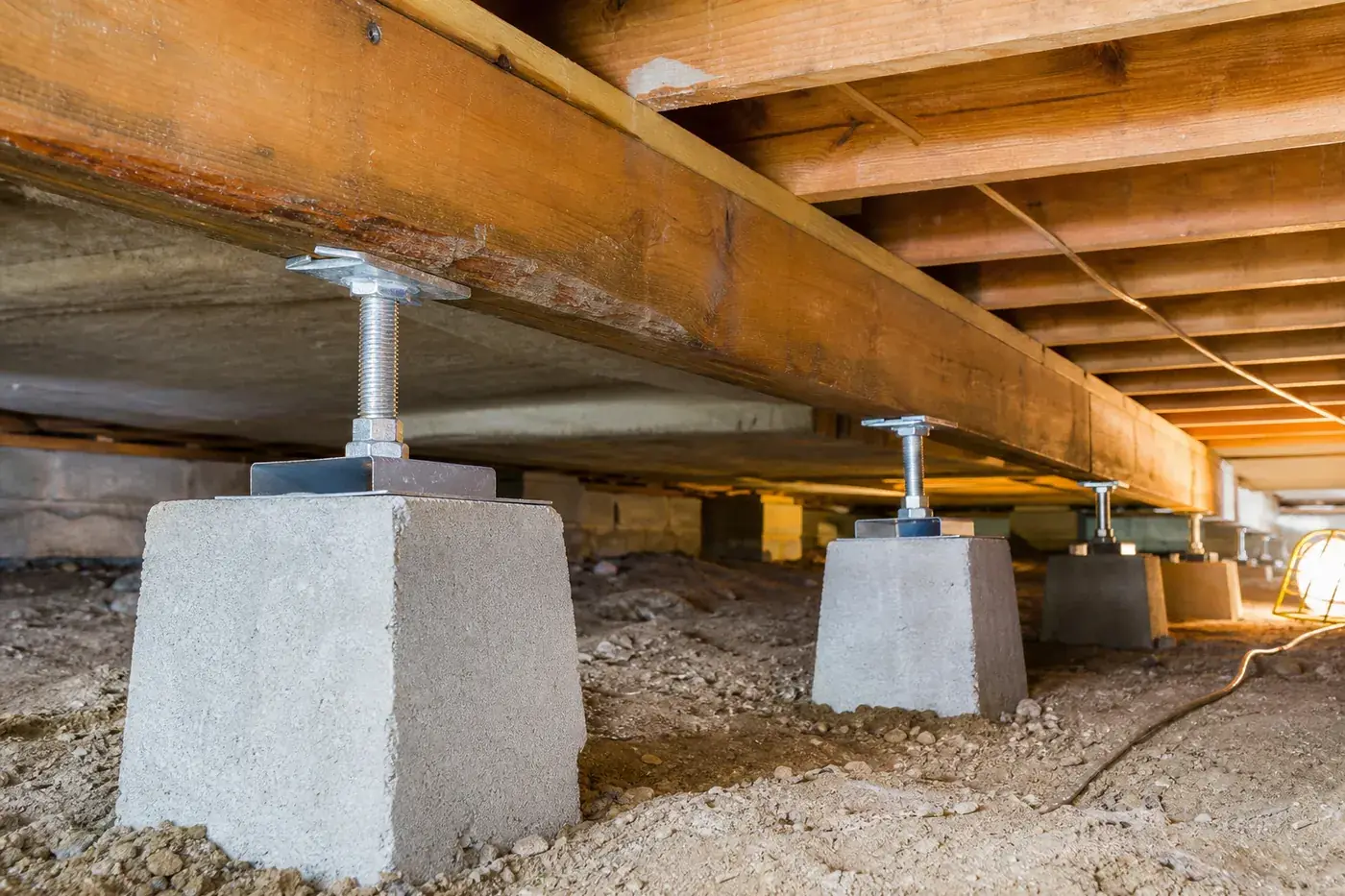
How a raised floor holds itself up
Rows of piers, concrete in most houses and sometimes old wood posts or blocks, rest on the soil under the house. Wood beams run across the tops of the piers, joists run across the beams, and the floor is nailed to the joists. Around the outside, a perimeter beam or footing carries the walls. Between pier top and beam, thin shims take up the slack. Each part can be checked with a flashlight, which no slab allows.
Why do pier and beam floors sag in Austin?
- Piers riding the clay. A pier on a shallow pad moves with the soil. East of I-35 that soil is often deep shrink-swell clay, which drops in a dry summer and rises after wet weeks.
- Shims that failed. Wood shims rot or crush, and stacks of loose shims slip, so the beam settles onto a pier that hasn't moved.
- Moisture. A crawl space that stays damp after a wet May softens sills and joist ends.
- Insects. Termite damage often shows up first at the sill plate.
- Long spans. A remodel that removed a wall, or beams set too far apart, leaves joists bending between supports.
What does pier and beam foundation repair involve?
Re-shimming jacks a beam back up and replaces worn shims with solid ones, often steel. It is the lightest repair and the first thing to check.
New or added piers go under beams where the originals have sunk or sit too far apart. They may be pressed concrete, steel, or a poured pad with an adjustable steel post that can be fine-tuned later.
Wood repair replaces rotted sills, sisters new lumber alongside weak joists, or adds a beam under a long span.
Water control fixes the cause: gutters, grading and crawl space venting. If the perimeter beam itself has dropped, it needs piers driven beneath it, much like slab repair.
Before the specialist comes
Find the crawl space access and clear a path to it. Roll a marble across the worst floor and note which way it goes. List the doors that stick and the season they started. Check whether gutters dump water against the skirting. Each repair's typical price sits in the Austin pier and beam and slab price table.
Questions homeowners ask
Will a pier and beam house need leveling again later?
There is no fixed schedule. On stable ground with good drainage a house can go many years. On shrink-swell clay, piers can move after a hard dry summer, so some owners need a small shim adjustment now and then. Keeping water out from under the house stretches the time between them.
Tell us what has moved
A sloping floor, a door that stopped latching, a crack that keeps growing: describe it and say which room. One independent foundation specialist serving Austin will phone to hear more and find a time to come by.